Understanding the Power Outage Victoria Crisis
The recent power outage in Victoria has left many residents without electricity, causing disruptions to daily life, work, and essential services. This article aims to provide an in-depth analysis of the causes, prevention strategies, and recovery methods for power outages in Victoria, Australia. As we navigate the complexities of modern infrastructure, understanding the root causes of power outages is crucial in developing effective solutions to mitigate their impact. The 2026 power outage in Victoria serves as a stark reminder of the importance of reliable energy supply. In recent years, power outages have become increasingly frequent and widespread, affecting not only residential areas but also critical infrastructure such as hospitals, schools, and transportation systems. The consequences of power outages can be far-reaching, from economic losses to loss of life. In Victoria, the power outage crisis has raised concerns about the state's preparedness to deal with such events. By examining the causes of power outages, we can identify areas for improvement in our energy infrastructure and develop effective strategies to prevent and respond to future outages.Causes of Power Outages in Victoria
Power outages can be attributed to a variety of factors, including equipment failure, transmission and distribution issues, and extreme weather conditions. In Victoria, the 2026 power outage was reportedly caused by a combination of these factors. Equipment failure, such as faulty transformers and switchgear, can lead to power outages when they malfunction or are unable to handle the load. Transmission and distribution issues, including overhead line faults and substation problems, can also cause widespread power outages. Extreme weather conditions, such as heatwaves, storms, and bushfires, can further exacerbate power outages by damaging infrastructure and disrupting energy supply. One of the primary causes of power outages in Victoria is the aging infrastructure. Many of the state's power transmission and distribution lines are old and in need of replacement or upgrade. This can lead to a higher risk of equipment failure and power outages. Furthermore, the growing demand for electricity in Victoria, driven by population growth and economic development, puts additional pressure on the energy grid, increasing the likelihood of power outages.Prevention Strategies for Power Outages in Victoria
While it is impossible to eliminate power outages entirely, there are several strategies that can be employed to prevent or minimize their impact. One of the most effective ways to prevent power outages is to invest in infrastructure upgrades and maintenance. Regular inspections and maintenance of power transmission and distribution lines can help identify potential issues before they become major problems. Additionally, the use of smart grid technologies, such as advanced metering infrastructure and grid management systems, can help detect and respond to power outages more quickly. Another strategy for preventing power outages is to promote energy efficiency and conservation. By reducing energy consumption, households and businesses can reduce their reliance on the grid and minimize the impact of power outages. This can be achieved through the use of energy-efficient appliances, lighting, and HVAC systems. Moreover, the adoption of renewable energy sources, such as solar and wind power, can help reduce the strain on the grid and minimize the risk of power outages.Recovery Strategies for Power Outages in Victoria
When a power outage occurs, prompt recovery is essential to minimize disruption and ensure public safety. One of the key recovery strategies is to establish a clear communication plan, which includes regular updates on the status of the power outage and estimated restoration times. This can be achieved through social media, text messages, and local news outlets. Additionally, the deployment of emergency response teams, including linemen and engineers, can help restore power quickly and safely. Another important recovery strategy is to provide support to affected communities. This can include the provision of emergency food, water, and shelter, as well as access to medical care and other essential services. Furthermore, the distribution of portable generators and other equipment can help households and businesses maintain essential services, such as lighting and communication.Lessons Learned from the 2026 Power Outage in Victoria
The 2026 power outage in Victoria serves as a stark reminder of the importance of reliable energy supply. While it is impossible to eliminate power outages entirely, there are several lessons that can be learned from this event. One of the key lessons is the need for infrastructure upgrades and maintenance. The aging infrastructure in Victoria highlights the importance of investing in modernizing the energy grid to ensure it can meet the demands of the 21st century. Another lesson learned from the 2026 power outage is the importance of energy efficiency and conservation. By promoting energy-efficient practices and adopting renewable energy sources, households and businesses can reduce their reliance on the grid and minimize the impact of power outages. Furthermore, the adoption of smart grid technologies can help detect and respond to power outages more quickly, reducing the risk of disruptions and improving overall resilience.Conclusion
The power outage in Victoria serves as a stark reminder of the importance of reliable energy supply. By understanding the causes of power outages and developing effective prevention and recovery strategies, we can mitigate their impact and ensure a more resilient energy grid. As we move forward, it is essential to invest in infrastructure upgrades and maintenance, promote energy efficiency and conservation, and adopt smart grid technologies to ensure a more reliable and efficient energy supply for all Victorians.FAQ
Q: What caused the 2026 power outage in Victoria?
The 2026 power outage in Victoria was reportedly caused by a combination of equipment failure, transmission and distribution issues, and extreme weather conditions.
Q: How can I prepare for a power outage?
To prepare for a power outage, households and businesses can stock up on emergency supplies, such as food, water, and flashlights, and consider investing in portable generators or other backup power sources.
Q: How can I stay safe during a power outage?
During a power outage, it is essential to exercise caution and follow safety guidelines, such as avoiding downed power lines, using flashlights instead of candles, and keeping emergency phone numbers handy.
Q: How long will it take to restore power after an outage?
Restoration times for power outages can vary depending on the severity of the outage and the availability of resources. However, with the implementation of smart grid technologies and emergency response plans, power restoration times are expected to improve in the future.
Q: What support is available to affected communities during a power outage?
Affected communities can access emergency support services, including food, water, shelter, and medical care, through local government and emergency services.

Victoria lashed by 100km/h wind gusts, power outages across state The
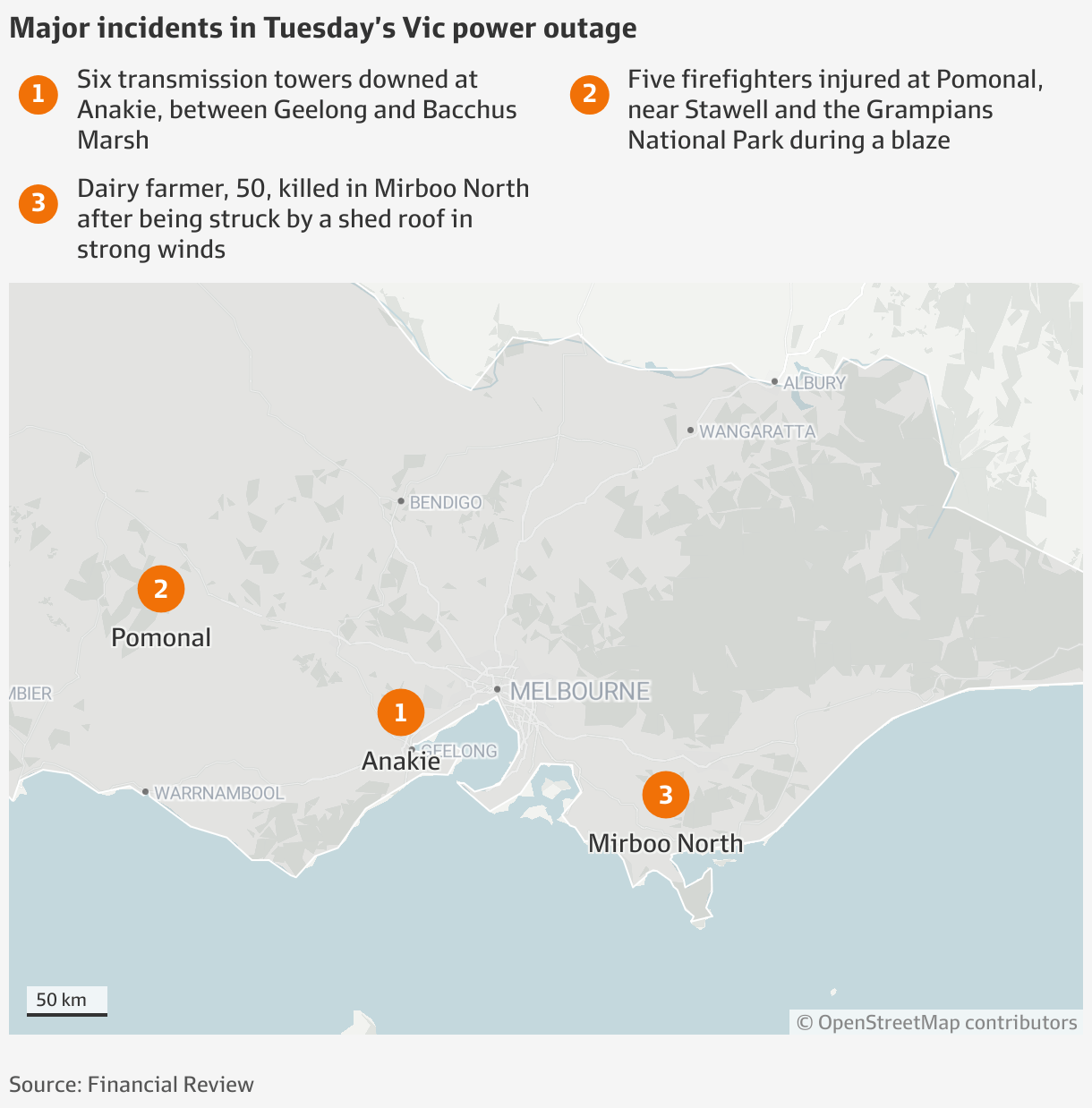
Victoria power outage will take ‘days if not weeks’ to fully restore

Power Outages in Victoria Your Comprehensive Outage Map Guide
